The first tutorial specified tables, years, and filters by hand. A
sample frame (sfw) captures those same
choices as a single reusable object – a registry of keys and
typed rules that you can apply to any data frame, check
against, and hand to panelize() to govern a build.
Build a frame
A frame is just a set of rules. Friendly arguments to
create_sfw() are convenience filters that lower into
rules:
sfw <- create_sfw(
  "housing 2024",
  state       = "GA",     # -> filter on geo_state_abbr
  filter_501c = "3",      # -> filter on subsection_code (501(c)(3))
  years       = 2019:2021 # -> filter on TAX_YEAR
)
sfw
#> <sfw>  housing 2024
#>   keys:
#>     - entity: EIN2  (entity)
#>     - time: TAX_YEAR  (time)
#>   rules: 3
#>     - [filter] filter:geo_state_abbr
#>     - [filter] filter:subsection_code
#>     - [filter] filter:TAX_YEAR
Entity (EIN2) and time (TAX_YEAR) keys are
registered by default. Add the filing-level key so deduplication and
joins know a unique record:
Structured rules
Beyond the sugar, add_rule() adds any rule directly.
Filters are structured – a column, an operator, and
values – which keeps them inspectable and portable:
sfw <- add_rule(sfw, "revenue positive", "filter",
                column = "F9_01_REV_TOT_CY", op = ">", values = 0)
get_rules(sfw)
#>                     name   type active                     detail
#> 1  filter:geo_state_abbr filter   TRUE       geo_state_abbr in GA
#> 2 filter:subsection_code filter   TRUE       subsection_code in 3
#> 3        filter:TAX_YEAR filter   TRUE TAX_YEAR in 2019,2020,2021
#> 4       revenue positive filter   TRUE       F9_01_REV_TOT_CY > 0
op may be in, not_in,
==, !=, >, >=,
<, <=, between,
is_true, is_false; for an arbitrary predicate
use expr = "...".
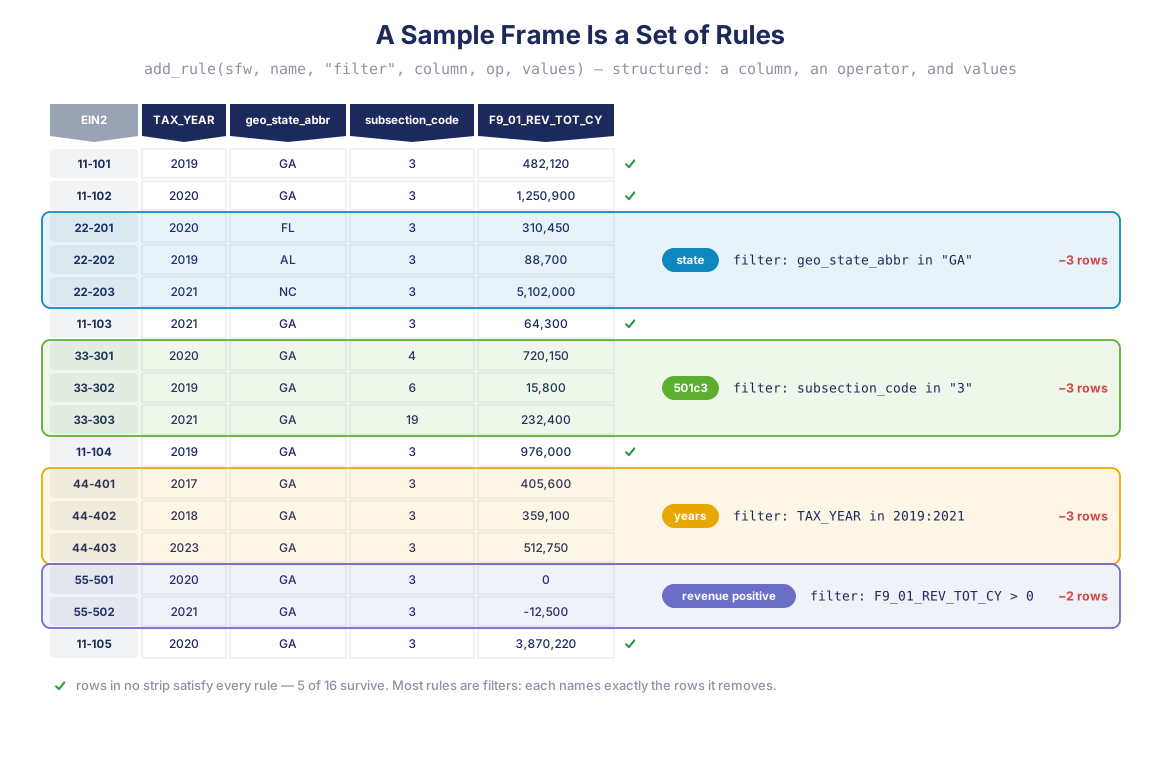
Most rules are filters: each one names a column, an operator, and the values it tolerates — which is to say, each one names exactly the rows it removes:
Apply the frame
apply_sfw() runs the rules on a data frame. Here is a
tiny stand-in for a BMF-merged panel:
df <- data.frame(
  EIN2             = c("EIN-11-1111111", "EIN-22-2222222", "EIN-33-3333333"),
  TAX_YEAR         = 2020,
  geo_state_abbr   = c("GA", "GA", "FL"),
  subsection_code  = c("3", "4", "3"),
  F9_01_REV_TOT_CY = c(500000, 0, 250000),
  stringsAsFactors = FALSE
)

out <- apply_sfw(df, sfw, verbose = FALSE)
out
#>             EIN2 TAX_YEAR geo_state_abbr subsection_code F9_01_REV_TOT_CY
#> 1 EIN-11-1111111     2020             GA               3            5e+05
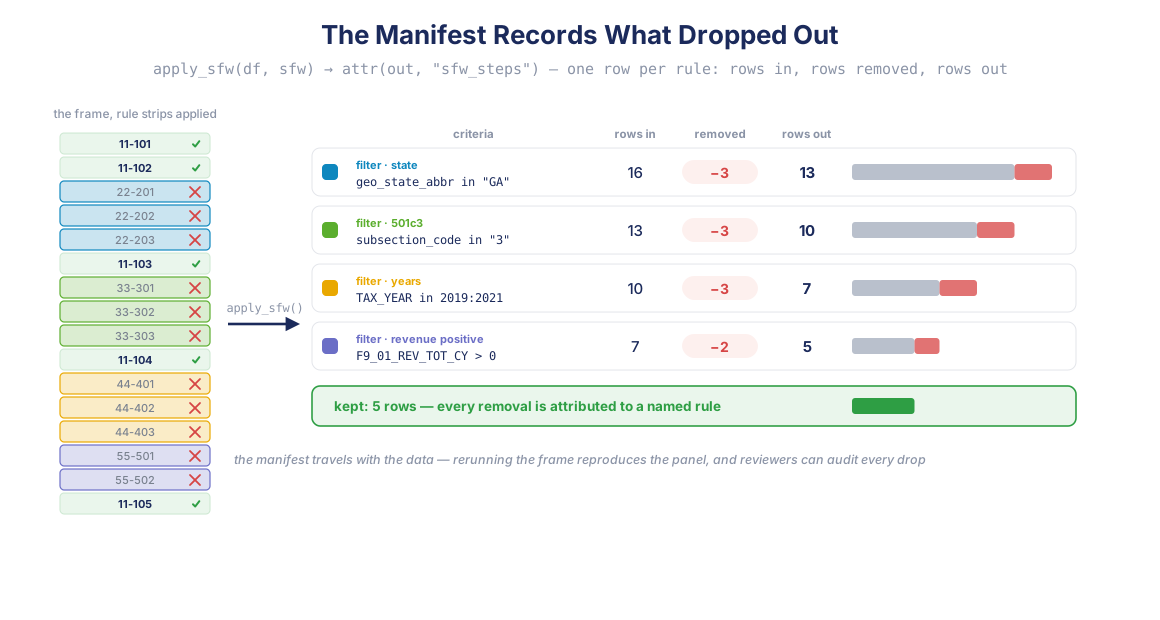
Only the Georgia 501(c)(3) with positive revenue survives. Every step is recorded as a manifest attribute – a reproducible record of what each rule removed:
attr(out, "sfw_steps")
#>                             step                   criteria rows_before
#> 1  filter: filter:geo_state_abbr       geo_state_abbr in GA           3
#> 2 filter: filter:subsection_code       subsection_code in 3           2
#> 3        filter: filter:TAX_YEAR TAX_YEAR in 2019,2020,2021           1
#> 4       filter: revenue positive       F9_01_REV_TOT_CY > 0           1
#>   rows_after cols_before cols_after
#> 1          2           5          5
#> 2          1           5          5
#> 3          1           5          5
#> 4          1           5          5
The manifest is the frame’s audit trail: one row per rule, recording how many rows each one removed on its way to the final panel:
conform() answers the inverse question – does a data
frame already satisfy the frame? – without changing it:
conform(df, sfw, verbose = FALSE)$rows_violating
#> [1] 2
Prefiltering before merges makes it faster
When you hand the frame to panelize(), it governs the
build:
Two restrictions are applied before the expensive table merges, so the package does far less work on a large panel:
- Years – only the requested years’ files are downloaded.
-
Entities – if the frame restricts to a set of
organizations, that set is pushed down to read time. Because
EIN2is present in every efile table, only those organizations’ rows are ever read, and only they are carried into the merges.
Trait filters (state, 501(c) type, NTEE) live in the BMF, so they
resolve after the BMF merge. To turn a trait restriction into a
read-time prefilter, resolve it to an organization set from the BMF
first, then add it as a subset rule:
bmf   <- bmf_retrieve(states = "GA")                      # just the GA mart
ga_c3 <- bmf$EIN2[bmf$geo_state_abbr == "GA" &
                    bmf$subsection_code == "3"]

sfw <- add_rule(sfw, "GA 501c3 cohort", "subset", subset = ga_c3)
p   <- panelize(sfw = sfw, tables = c("P00", "P01", "P08"), years = 2019:2021)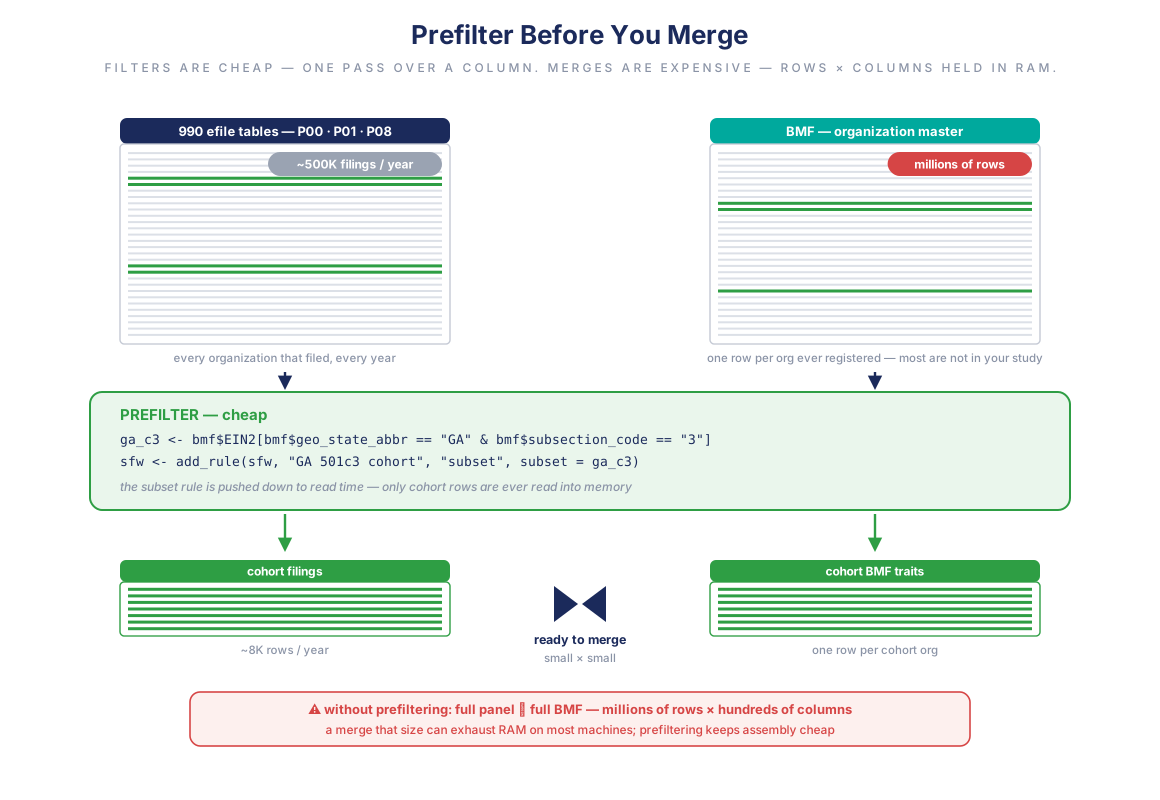
Now panelize() reads only those organizations before
merging tables and stacking years – the trait filter has become a fast
pushdown. The remaining rules still apply after assembly as the source
of truth, and the whole pipeline is documented in the resulting panel’s
step manifest.